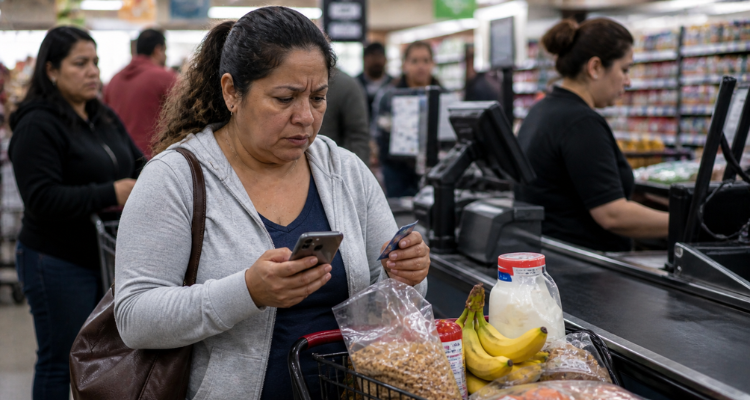
The blow has not landed equally across states. In Illinois, state officials estimate that up to 150,000 people could lose their benefits. In Nevada, the figure stands at 27,700 recipients — roughly 6 percent of all SNAP beneficiaries in the state — representing a direct reduction of $5.3 million per month in benefit flows. In Oregon, more than 33,000 people had already lost food benefits before May 1, and the state’s Department of Human Services has set up a dedicated hotline to help people who believe they may be able to recover their eligibility.
The states seeing the sharpest drops are Arizona, with a 42 percent decline in SNAP participation, and Virginia and Tennessee, both down 12 percent. The CBPP emphasizes that these collapses are not explained by improving economic conditions — the unemployment rate has held steady at 4 percent since July 2025 — but rather by the new eligibility barriers and additional administrative requirements imposed by H.R. 1.
Food banks brace for the surge
Feeding America warned ahead of May 1 that SNAP provides, on average, 9 meals for every 1 meal a food bank can supply. With thousands losing their benefits, food banks and community pantries across the country are anticipating a significant spike in demand that their current resources will struggle to absorb.
In Chicago, neighborhood grocery stores also voiced concern. Living Fresh Market, a local chain serving low-income areas, warned that the loss of EBT-using customers could force it to scale back operations — which in turn would further limit access to fresh food in the most vulnerable communities.
California and New York: the next states to enforce cuts
Two of the states with the largest SNAP recipient populations in the country — California and New York — have not yet fully applied the new work requirements across their caseloads. According to NewsNation, both states are expected to begin doing so starting in June 2026. Given the sheer volume of recipients in these two states, their implementation could represent the single largest blow to the program since H.R. 1 took effect.
If you receive SNAP and are unsure whether the new work requirements apply to you, act now: contact your state’s SNAP agency, check your status, and find out whether you qualify for an exemption. Losing benefits does not have to be permanent — people who meet the work requirements for at least 30 consecutive days can reapply for the program and regain access to their food assistance.