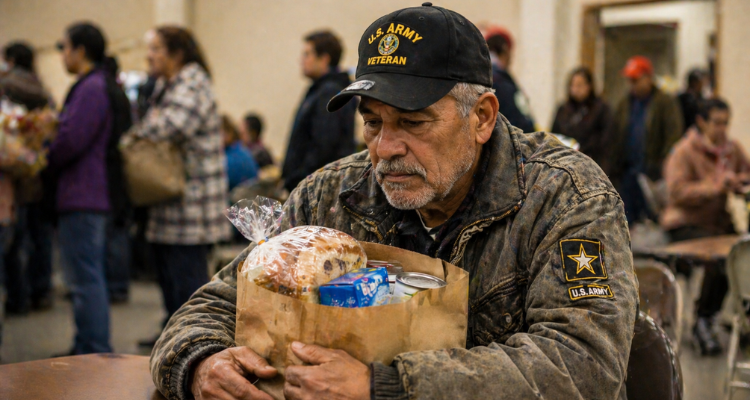
There is a change to the SNAP program affecting three particularly vulnerable groups that many people still do not know about. Since February 1, 2026, military veterans, people experiencing homelessness, and young adults who aged out of the foster care system are no longer automatically exempt from the program’s work requirements. The federal law H.R. 1, signed by President Trump in July 2025, eliminated in one stroke the protections that had shielded these groups from SNAP’s work demands for years.
This is a change few people saw coming. For years, both parties had agreed that precisely these three groups deserved special protection. As one lawmaker recently noted, stripping veterans, people without a roof over their heads, and former foster youth of food access for failing to meet arbitrary work benchmarks «contradicts the values upon which America was founded.» Yet the law has taken effect, and its consequences are already being felt across the country.
Who is affected and why meeting the requirement is so difficult for them
The new rule requires all adults between the ages of 18 and 64 without dependents under 14 and without a certified disability to prove at least 80 hours of work activity per month to keep their food benefits beyond three months.
For a veteran returning home with physical or psychological injuries not officially certified as a disability, finding and holding a 20-hour-per-week job can be a real and insurmountable barrier. For a person experiencing homelessness — who already faces the impossibility of maintaining a stable address — documenting work or volunteer hours and submitting them to a SNAP agency adds a bureaucratic burden that is practically impossible to manage. For a young adult between 18 and 24 who grew up in the foster care system without a family safety net, the transition to adult life is already extremely fragile — and losing food access can shatter that balance entirely.
How many people are at risk
The numbers are striking. In Michigan alone, up to 123,000 people could lose SNAP access as a direct result of these changes. In California, more than 24,000 unhoused people who were receiving SNAP could be cut off, with a disproportionate impact on adults of color. Across the country, more than 1.1 million veterans depend on the SNAP program to meet their basic food needs.
Most worrying of all, many of those affected still do not know their situation has changed. The impact does not hit all at once — it is rolled out gradually, applied at each recipient’s individual recertification. That means some people will not discover they have lost their benefits until a renewal letter arrives in the mail.
What you can do if you are one of those affected
If you are a veteran, currently experiencing homelessness, or aged out of the foster care system before 25 and receive SNAP, here are the options you need to know about before your next recertification:
First, check whether you have a physical or mental disability that could be medically certified — even if you are not currently receiving any benefit for it. If so, request an exemption with medical documentation before the new requirements are applied to your case. Second, consider whether you can document volunteer hours at a recognized organization, since these count the same as paid work hours toward the required 80 hours per month. Third, and most importantly: contact your state’s SNAP agency as soon as possible to find out exactly how your individual case stands. Do not wait for a benefit termination notice to arrive.
Food banks and community advocacy organizations are deploying targeted guidance resources for these three groups. If you are not sure where to start, reaching out to a local food bank can be the first step toward getting the support you need.