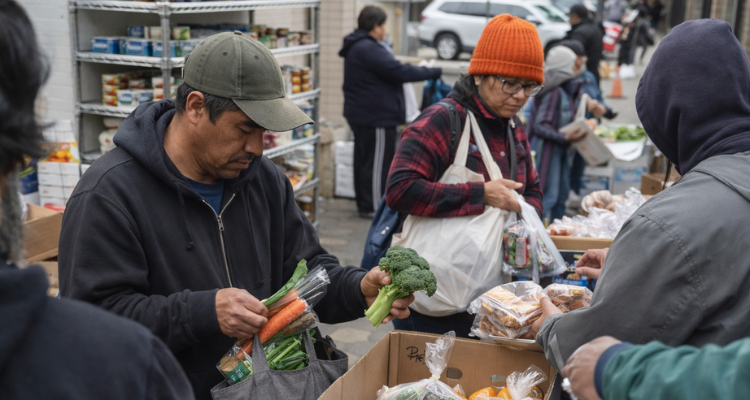
A report published on February 18, 2026 examines how mutual aid groups and community food networks are helping people meet basic needs across the United States as public programs face cuts and tighter access rules, including new eligibility pressures within the Supplemental Nutrition Assistance Program (SNAP).
The warning sign: 43 days without SNAP in 2025
For 43 days in 2025, about 42 million low-income families faced uncertainty about their next meals during a government shutdown that paused SNAP benefits for the first time since the program was implemented in 1964.
New guidance: more people required to prove work to keep benefits
The report says new SNAP guidance expanded who must meet work-related eligibility requirements, including groups previously exempt such as veterans, people experiencing homelessness, and adults ages 54 to 65. It also describes a mandatory 20-hour-per-week requirement that could disproportionately affect workers in industries hit by unemployment, as well as caregivers and people with disabilities.
Rising food insecurity amid abundance and waste
The piece highlights a paradox: strong overall food supply alongside growing barriers to access. The U.S. has 45,575 supermarkets and a restaurant sector that reached $1.5 trillion in sales in 2025. Yet food insecurity rose, with 18 million U.S. households experiencing food insecurity in 2023, up from 17 million in 2022.
At the same time, the report cites annual food waste of 92 billion pounds: 38% is unsold or uneaten food and more than 51% comes directly from the food service industry. While about 12% of the U.S. population receives SNAP assistance to buy food, the report argues it is often not enough to close the gap.
Emergency program cuts and growing pressure on food banks
Beyond SNAP eligibility pressures, the report describes strain on the emergency food system. It notes a $500 million reduction the prior year to the Emergency Food Assistance Program (TEFAP), which it says resulted in fewer deliveries of U.S.-produced vegetables, meat, and dairy to food banks.
Who fills the gap: mutual aid, neighborhood pantries, and community fridges
As public supports become less reliable, the report points to organizations that distribute food without eligibility tests. One example is Food Not Bombs, a volunteer-run network with around 1,000 chapters across 60 countries that provides free food through partnerships with food banks, farms, and local grocers.
The report also describes efforts such as South Philadelphia Community Fridge, which stocks open-access fridges and pantries. It says the group operates a shopper reimbursement model that covers volunteer purchases up to $150 per week, alongside fridge maintenance, cleaning, and neighborhood outreach.
Everyday barriers: paperwork, restrictions, and fear of enforcement
The report emphasizes that access can be blocked by extensive paperwork and confusing rules, even when resources exist. It also notes that some places restrict items considered “luxuries.” In certain communities, fear linked to immigration enforcement can discourage people from using community food resources.
A local-first safety net for immediate needs
The report’s core takeaway is that when public food programs shrink or become harder to navigate, community-driven systems can respond quickly by redistributing food and organizing local support. In that context, mutual aid networks serve as a crucial backstop for households relying on SNAP—and for those who fall outside eligibility rules or struggle to complete administrative steps on time.