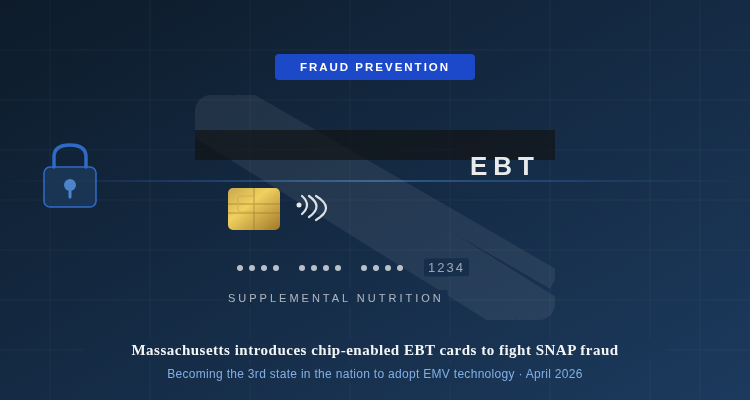
Governor Maura Healey has directed the Department of Transitional Assistance to roll out EMV chip technology on EBT cards, making Massachusetts the third state in the nation to adopt this security upgrade.
Massachusetts Governor Maura Healey has ordered the state’s Department of Transitional Assistance (DTA) to implement chip-enabled EBT cards across the SNAP program, in a move aimed at protecting beneficiaries from benefits theft that has cost the state tens of millions of dollars in recent years.
The announcement follows a string of SNAP fraud prosecutions in Massachusetts, as well as whistleblower allegations from inside the DTA describing what sources called «rampant» fraud within the federally backed assistance program. The administration says the new cards will bring EBT security in line with the protections that have long been standard on commercial credit and debit cards.
«Massachusetts is taking action to protect families and the programs they rely on to afford groceries and other essential goods. These new chip-enabled EBT cards will strengthen protections against theft and make sure this support is going to the people who need it.»
— Governor Maura Healey
How the Technology Works
The new cards will feature an EMV (Europay Mastercard Visa) microchip — the same technology embedded in standard bank cards for years. For every transaction, the chip generates a unique one-time cryptographic code that must be verified by the EBT system before the purchase is authorized. Because that code cannot be reused, any card data intercepted by criminals becomes essentially worthless.
Currently, the most widespread form of EBT theft involves installing card skimmers on point-of-sale (POS) terminals at grocery stores and retailers. These devices copy data stored on the card’s magnetic stripe, which criminals then use to drain benefit balances before recipients can spend them. The shift to chip technology is designed to make that attack method obsolete.
Chip and tap-enabled EBT cards will be used by inserting the card into a POS terminal or tapping it on the reader, rather than swiping the magnetic stripe.
«Adding chip-based cards would be a significant step in preventing fraud and stolen benefits.»
— Haywood Talcove, public benefits security expert
Key Numbers: Massachusetts SNAP Program
- Nearly 1 million residents receive SNAP benefits in the state
- Approximately 5,500 retailers accept EBT transactions
- The state distributes roughly $2.6 billion in SNAP benefits annually
- Less than 1% of the SNAP caseload has been found to have committed fraud
- Massachusetts will be the third state in the country to adopt chip EBT cards
Pilot Launch Expected Later This Year
The DTA plans to launch a pilot program before the end of 2026 and has already begun notifying affiliated retailers about the upcoming transition. The roughly 5,500 stores that accept EBT payments in Massachusetts will need to upgrade their POS terminals to process the new chip cards.
Chip and tap-enabled EBT cards were not authorized by the federal government until 2024, and federal guidance allowing states to implement them was not released until August 2025. With that regulatory pathway now open, Massachusetts is moving quickly to become only the third state to roll out the technology statewide.
«After years of advocacy and hard work to get here, Massachusetts is excited to introduce a measure that will further reduce opportunities for benefits to be stolen, helping families put food on the table and stopping theft before it occurs.»
— Michael Cole, DTA Commissioner
Anti-hunger advocates have welcomed the announcement, while also calling for faster benefit replacement processes when theft does occur and requesting clearer public timelines for the full rollout across all retailers.