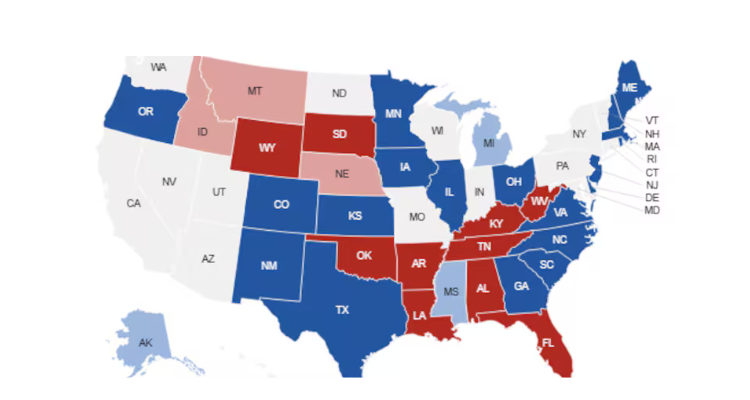
Democrats won control of both the House of Representatives and the Senate on November 3, 2026, in what is already being described as a historic victory. In the Senate, Democrats flipped at least six seats from Republicans — far more than the four they needed to reclaim the majority. In the House, projections point to a gain of up to 25 seats, which would be their largest majority since 2009. This result has direct implications for the millions of families who depend on SNAP, Medicaid, SSI, and other assistance programs.
The first thing to know is that no change to your benefits happens immediately. The new Congress does not take office until January 2027, and any legislative change requires months of process. Your November and December benefits arrive normally.
What Democrats promised for their first days in power
House Minority Leader Hakeem Jeffries announced before the election that if Democrats won the majority they would bring to a vote within the first 100 hours a bill to reverse the Medicaid cuts included in the H.R. 1 «One Big Beautiful Bill» law. Democrats also made clear their intention to protect SNAP from further cuts in the 2027 budget negotiations.
However, there is an important reality: even with Congress changing hands, President Trump remains the executive until January 2029. Any law the new Democratic Congress passes to reverse H.R. 1 cuts will need to survive a possible presidential veto, which requires a two-thirds majority in both chambers — a very difficult threshold to reach.
What Democrats can realistically do
The new Congress’s most immediate power is not passing new laws that Trump can veto, but controlling the budget. Democrats will have the final say over how much money goes to each program in fiscal year 2028, and can use budget negotiations to protect or expand funding for SNAP, Medicaid, LIHEAP, and other programs. They will also be able to block new cuts proposed by the administration or Republicans.
Another relevant front is Congressional oversight. With the majority, Democrats can hold hearings and demand information from federal agencies on the implementation of H.R. 1 cuts, SNAP work requirements, and the effects of Medicaid restrictions on refugee and immigrant families.
What does NOT change right away
The H.R. 1 cuts that are already in effect remain law. Work requirements for SNAP recipients over 54, the elimination of Medicaid for refugees and asylees, and the more than 4 million people who have already lost program access since July 2025 — all of that stays in place until a new law is signed by the president or struck down by the courts.
SNAP amounts will not change until October 2027 at the earliest, regardless of the election outcome. Current eligibility rules, recertification timelines, and your state’s procedures do not change overnight either.
When real effects will start to be felt
The new Congress takes office on January 3, 2027. The first weeks will be about proposals, votes, and negotiations — not immediate changes to EBT cards. Real effects on benefits, if any, will not be felt before fall 2027, when new federal budgets take effect.
The most important thing you can do right now is keep your case up to date: renew your eligibility when due, respond to notices from your state SNAP agency, and stay informed through official sources. Real changes to your benefits always come through a letter from your agency — not through news or social media.