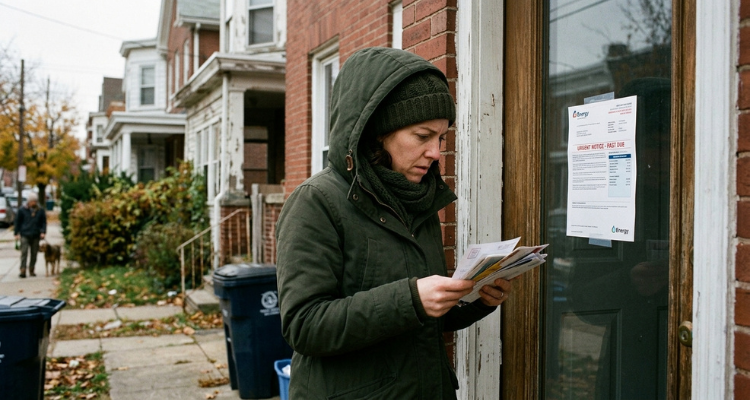
With fall just around the corner and temperatures starting to drop, millions of low-income families across the country can apply for help paying their heating and energy bills through the federal LIHEAP program — the Low Income Home Energy Assistance Program. Most states open applications in October or November, and if you already receive SNAP, you very likely qualify automatically without needing to prove your income separately.
LIHEAP is one of the least-known assistance programs among families who receive SNAP, despite being designed for the same audience. According to federal data, the average benefit ranges from $400 to $1,500 per year depending on the state, the type of energy used, and the household’s needs. For many families, that assistance can mean the difference between keeping the heat on or facing a shutoff in the middle of winter.
What LIHEAP actually covers
LIHEAP is not a single benefit — it is a program with several components that vary by state. The most common is heating assistance, which helps cover the cost of warming the home during winter months. Many states also offer cooling assistance in summer — especially important for elderly people and families with infants.
LIHEAP also includes an energy crisis component for households that are about to have their electricity or gas shut off, or have already had it cut. In these cases, assistance can be processed in 24 to 48 hours in emergency situations. Some states also use LIHEAP funds to finance home energy efficiency improvements — such as replacing old boilers, insulating walls, or installing more efficient windows — that permanently reduce a household’s energy bill.
If you receive SNAP, you very likely qualify
LIHEAP’s income requirement is 150% of the federal poverty level or 60% of the state median income, whichever is higher. In practice, this means that if your household receives SNAP, SSI, TANF, or Medicaid, in most states you automatically qualify for LIHEAP without needing to submit separate income documentation.
For a family of four in the 48 contiguous states, the 150% federal poverty threshold works out to approximately $4,875 gross per month in 2026. Some states have more generous limits — several allow incomes up to 60% of the state median, which can be considerably higher.
When and how to apply for LIHEAP in your state
Application opening dates vary by state, but most open between October and November 2026. States with harsher winters, such as Minnesota, Maine, and Wisconsin, often open earlier — sometimes as early as September. Southern states with extreme summers may also have spring application periods for cooling assistance.
To apply for LIHEAP you have several options. The first is to call 211 — the social services number available nationwide — and ask to be connected to your county’s energy assistance program. The second is to visit the Administration for Children and Families website at liheapch.acf.hhs.gov and select your state to find local contact information. The third is to go directly to your county social services office, which typically handles LIHEAP applications as well.
The documents you will typically need are: a valid ID, proof of address, a recent energy bill with your account number, and — if you receive SNAP or another assistance program — documentation to confirm that enrollment.
Do not wait until it gets cold — waiting lists can be long
One of the most common mistakes among eligible families is waiting until cold weather arrives to apply for LIHEAP. Program funds are limited — once exhausted, many states close applications until the next fiscal year. In some counties and states, waiting lists can stretch for several weeks.
Experts recommend applying for LIHEAP as soon as applications open in your state, even before temperatures drop, to secure your place on the list. If you are already in an emergency situation — your utility company has sent a shutoff notice or has already cut service — make sure to mention it when you apply, as most programs have a crisis component that can be processed on a priority basis.
If you receive SNAP and have never applied for LIHEAP, this fall is the time to do it. Call 211 this week and ask when the program opens in your state.