There is a SNAP program rule that many recipients still do not know about, and it can have devastating consequences: if your benefits are stolen through skimming or card cloning, the federal government no longer reimburses you. The federal authority that allowed states to replace stolen benefits expired on December 20, 2024, and Congress has not renewed it since. Any theft occurring on or after December 21, 2024 is no longer eligible for replacement using federal funds.
It is worth explaining this clearly because confusion about the rule remains widespread. For more than two years — from October 2022 to December 2024 — a federal program did exist that allowed recipients to recover stolen money. During that period, states replaced stolen benefits for more than 450,000 households, totaling more than $211 million. That program no longer exists.
Why this protection disappeared
The replacement program was created by Congress in December 2022 as a temporary measure in response to rising SNAP benefit theft through skimming. It always had an expiration date built in: it was extended several times through continuing resolutions, until the final extension set the cutoff at December 20, 2024. When that date arrived, Congress had the option to extend it again — and chose not to. The American Relief Act of 2025, the funding legislation passed at that time, did not include any extension of this authority.
The result is that, since then, anyone who suffers theft of their SNAP benefits must absorb the loss unless their state decides to use its own funds to cover it — something no state is required to do, and not all are doing.
Why EBT cards are so vulnerable to theft
The underlying problem is technological. Unlike regular credit and debit cards, which have included an EMV security chip since 2015, the vast majority of EBT cards in the country still use a magnetic stripe — the same technology that bank cards abandoned more than a decade ago precisely because it was vulnerable to data theft.
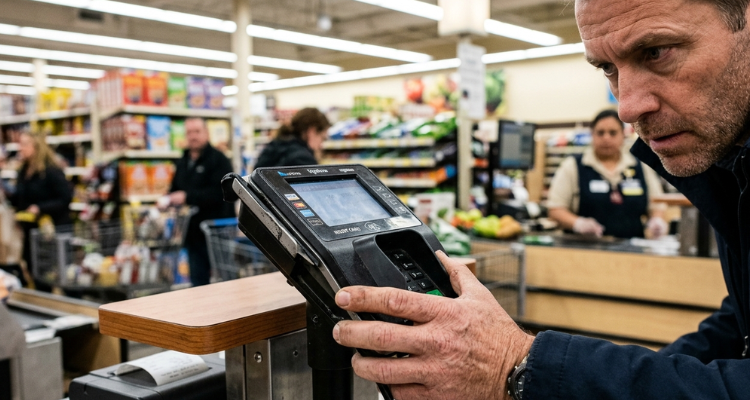
Criminals install small cloning devices, called skimmers, on card readers at grocery stores and gas stations. When you swipe your EBT card, the device copies the magnetic stripe data in milliseconds. With that information, criminals manufacture fake cards and, as soon as benefits reload at the start of the month, drain the victim’s account — often within hours.
What you can do if your benefits are stolen now
Even though federal reimbursement no longer exists, you still have options. The first step is to check whether your state offers a state-funded replacement program — some do, though it is not required. To find out, contact your state’s SNAP agency or Department of Social Services.
If you decide to file a claim, it is essential to document everything as soon as possible: write down or take a screenshot of your EBT account history showing the unauthorized transactions, with exact dates and times. It is also advisable to file a police report, since although it is not always required, it strengthens your claim and some states request it as part of the process.
How to protect your card so this does not happen to you
Since there is no longer a federal safety net, prevention is now the only real defense. Here are the most effective steps you can take: never share your PIN with anyone, even someone claiming to represent your SNAP agency — neither the state nor your card processor will ever ask for your PIN by phone, text, or email. Change your PIN at least once a month and avoid obvious numbers. Check your balance and transactions frequently through the ebtEDGE or ConnectEBT app, or by calling the number on the back of your card.
Many states now let you freeze your card when you are not using it and unfreeze it only at the moment of purchase — a feature available in the ebtEDGE app that dramatically reduces the risk. You can also visually inspect the card reader before swiping: if it looks loose, misaligned, or has extra parts attached, alert the store manager and use a different terminal.
Some states, including California and Oklahoma, have already begun issuing chip-enabled EBT cards, which virtually eliminate the risk of skimming. If your state does not yet offer them, daily prevention is, for now, your best protection.