A new analysis published this week confirms what many families are already feeling: more than 3.5 million people have lost access to SNAP since the «One Big Beautiful Bill» law took effect in July 2025. It is the largest drop in program participation in decades — and it is not happening because people need less help. It is happening because the new rules are cutting millions off from their food benefits.
To put it simply: before the law, there were 42 million Americans receiving SNAP assistance. Today there are 38 million. Four million fewer in less than a year. And the number keeps falling.
What exactly changed?
The law introduced three main changes that are responsible for this massive drop.
The first is the new work requirements. If you are between 18 and 64 years old, do not have children under 14 in your care, and do not have a certified disability, you are now required to work, volunteer, or participate in job training for at least 20 hours per week to keep receiving benefits. Before the law, this requirement only applied up to age 54. Now it reaches up to 64. Anyone who does not meet it loses SNAP after three months.
The second change is the removal of exemptions for groups that were previously protected. Military veterans, people experiencing homelessness, and young adults who aged out of the foster care system at 18 are no longer automatically exempt from work requirements. If they cannot show work activity, they can lose their benefits too.
The third change affects immigrants with legal status. Many people living legally in the United States who received SNAP — refugees, humanitarian parolees, domestic violence victims — lost their eligibility for the program starting April 1, 2026.
Food banks are overwhelmed
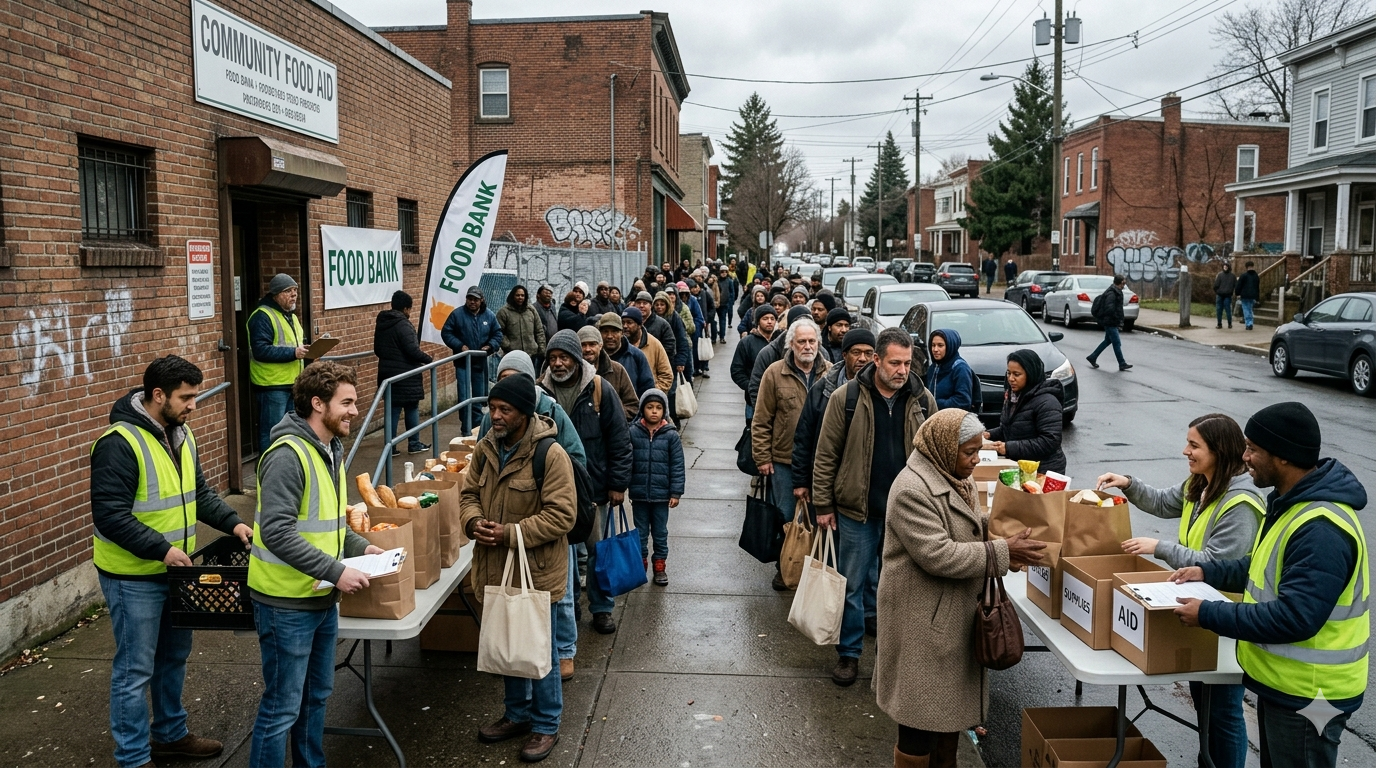
When someone loses SNAP, their need to eat does not disappear — they just have to find another way. And that is pushing food banks across the country to their limits.
The most striking number comes from California: food banks in the state are now serving 6 million people per month. To understand what that means: during the worst of the COVID pandemic — the moment of greatest need that most people remember — they were serving 4.5 million. Today they are above that historic peak. «We kind of never got back to normal after the pandemic,» admitted one California Food Banks official.
The pattern repeats across the country. Food banks warn they are not equipped to replace what SNAP provides: the program delivers, on average, 9 meals for every 1 meal a food bank can offer. When millions lose SNAP, charity cannot fill that gap.
What is coming in the months ahead
The worst may still be ahead. California — the state with the most recipients in the country — begins applying the new work requirements on June 1, 2026. An estimated 55,000 to 60,000 Californians per month are expected to lose benefits starting in October, when their three-month grace period runs out. New York, the other major state, is in the same process.
On top of that, food prices keep rising. The pace of food inflation is expected to increase in the coming months, according to the Federal Reserve. In other words: benefits do not stretch as far as they used to, and fewer people are receiving them.
Can you get your benefits back if you lost them?
Yes, in many cases it is possible. If you lost SNAP for not meeting the work requirements, you can reapply as soon as you can show that you are completing the required 80 monthly hours of work activity — or that you qualify for an exemption. It is not the end — but it does require action. Contact your state’s SNAP agency as soon as possible to find out exactly what you need to demonstrate and how to get your benefits reinstated.