After eight years of extensions and failed negotiations, the U.S. House of Representatives approved the 2026 Farm Bill — formally known as the «Farm, Food, and National Security Act of 2026» — on April 30, 2026, by a vote of 224 to 200. It is the first new Farm Bill passed since 2018. The law includes significant changes for the SNAP program affecting the 42 million Americans who depend on its benefits, and now moves to the Senate for debate.
The news has two sides. On one hand, there is a positive change that has already gone viral: hot rotisserie chicken will be purchasable with an EBT card if the Senate confirms the measure. On the other, the law does not reverse the $187 billion in cuts to SNAP approved last year under H.R. 1 — the largest cuts to food assistance in the program’s history.
What changes: rotisserie chicken, cybersecurity, and more transparency
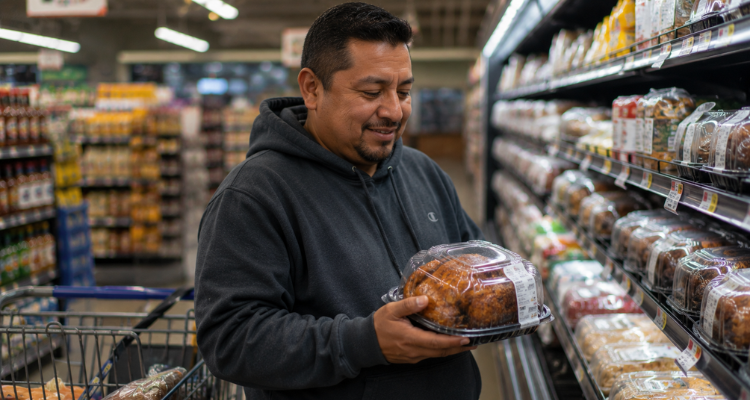
The most talked-about good news for SNAP recipients in the Farm Bill is the amendment passed with 384 votes in favor and only 35 against that will allow EBT cards to be used to purchase hot rotisserie chicken at supermarkets. Until now, the same chicken was eligible if bought cold but not if purchased fresh from the oven. The amendment corrects a paradox that has made no sense for decades.
In addition, the Farm Bill includes investment in the modernization of EBT cybersecurity systems at the county level — a priority for many local governments that have spent years battling skimming fraud. It also reauthorizes the GusNIP program (Gus Schumacher Nutrition Incentive Program), which doubles the value of SNAP benefits when used to buy fresh fruits and vegetables at participating farmers markets and retailers.
Another amendment passed with 416 votes in favor and only 8 against requires the USDA to publish detailed reports on how product restriction pilot programs are being implemented in states that have received waivers — and on the outcomes once those pilots are complete. This will bring more transparency to the question of whether soda and candy restrictions are actually achieving their stated goal of improving nutrition.
What does not change: the H.R. 1 cuts remain
The major disappointment for food advocacy organizations is that the Farm Bill does not reverse any of the cuts included in H.R. 1. The expanded work requirements reaching up to age 64, the removal of exemptions for veterans and people experiencing homelessness, the eligibility changes for immigrants with legal status, and the cost shifts to states — all of it remains intact.
The Food Research and Action Center (FRAC) described the passage as «deeply troubling,» noting that mandatory SNAP funding is set at $101.2 billion — $6.2 billion less than fiscal year 2026 levels. Democratic Representative Angie Craig of Minnesota warned that the bill «locks in $187 billion in SNAP cuts at a time when grocery prices are surging.»
What happens next: the Senate has the final say
House passage is only the first step. The Senate must now draft and vote on its own version of the Farm Bill. Senate Agriculture Committee Chairman, Republican John Boozman, has indicated he hopes to have a draft ready by late May or early June. However, the Senate requires 60 votes to pass the bill, which means Republicans need between 7 and 10 Democratic votes — something Boozman himself acknowledged will not be easy.
For SNAP recipients, the message is clear: the Farm Bill changes are not yet in effect. While the Senate works on its version, the H.R. 1 cuts continue to be applied and the state-by-state implementation timeline keeps advancing. Staying informed about each step of the legislative process is more important than ever to understand what lies ahead for your benefits in the coming months.