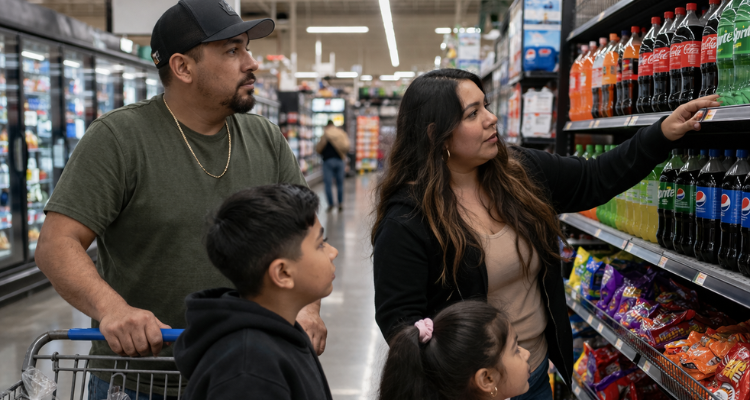
As of April 1, 2026, more than 3.3 million Texans who receive SNAP food assistance benefits can no longer use their Lone Star Card to buy candy or sugary drinks. The change, driven by Governor Greg Abbott and backed by the federal government, makes Texas one of the first states in the country to restrict what types of food can be purchased with nutrition assistance benefits.
The measure originated with a letter Abbott sent in 2025 to the U.S. Department of Agriculture (USDA) requesting a special waiver to limit SNAP benefits to higher-nutritional-value products. The USDA approved the request in August of that year. The Texas Legislature then codified the restrictions in Senate Bill 379, which Abbott signed into law and which took effect this April.
«Texas is leading the way in aligning SNAP benefits with healthier food options. By implementing these changes, we are promoting better nutrition and ensuring that this program helps families access nutritious food.»
— Governor Greg Abbott
What products can no longer be purchased with SNAP in Texas
The new restrictions target two main product categories. First, all candy is now excluded, including chocolate bars, chewing gum, caramels, taffy, and any dried fruit, raisins, or nuts that have been candied, crystallized, glazed, or coated with chocolate, yogurt, or caramel.
Second, non-alcoholic beverages made with water that contain five grams or more of added sugar per serving are also off-limits, as are drinks containing any amount of artificial sweetener. This effectively bans regular sodas, most diet drinks, and beverages made with less than 50% fruit or vegetable juice. To identify restricted products, recipients can check the nutrition label under total carbohydrates and scan the ingredient list for artificial sweeteners. Stevia and monk fruit are not considered artificial sweeteners under this law.
Products that remain eligible include ice cream, sorbet, and popsicles, as well as juices with more than 50% fruit or vegetable content. Fresh foods such as fruits, vegetables, meats, dairy products, and grains are entirely unaffected by the new rules.
How the change works in stores
Retailers authorized to accept SNAP payments must update their systems so that point-of-sale terminals automatically reject transactions for restricted products when a Lone Star Card is used. The Texas Health and Human Services Commission (HHSC) has published guidance for merchants that includes reviewing product labeling, updating checkout systems, and training staff on which items are no longer eligible. Major grocery chain H-E-B confirmed it has spent months preparing its systems to comply with the change.
Supporters and critics
The measure received bipartisan support in the state legislature, though it has not been without criticism. State Senator Borris Miles warned that many urban and rural communities in Texas have very limited access to fresh and nutritious food, which further narrows the options available to SNAP recipients. Senator Nathan Johnson suggested that if the real goal is to improve nutrition, it would be more effective to double the value of benefits when spent on fresh produce, rather than simply banning certain items.
From the advocacy side, Lorna Ramage of the organization Every Texan noted that Texas has the highest number of food-insecure residents in the entire country, and warned that the changes could lead to more hunger while also placing an ongoing administrative burden on small businesses, which must continuously track an evolving list of restricted products.
The federal waiver itself requires Texas to conduct periodic surveys of SNAP recipients to determine whether the restrictions are actually leading to healthier food choices. Those results are expected in the coming months and will be key to assessing the real-world impact of a policy that has already changed the way millions of Texans shop for food.